
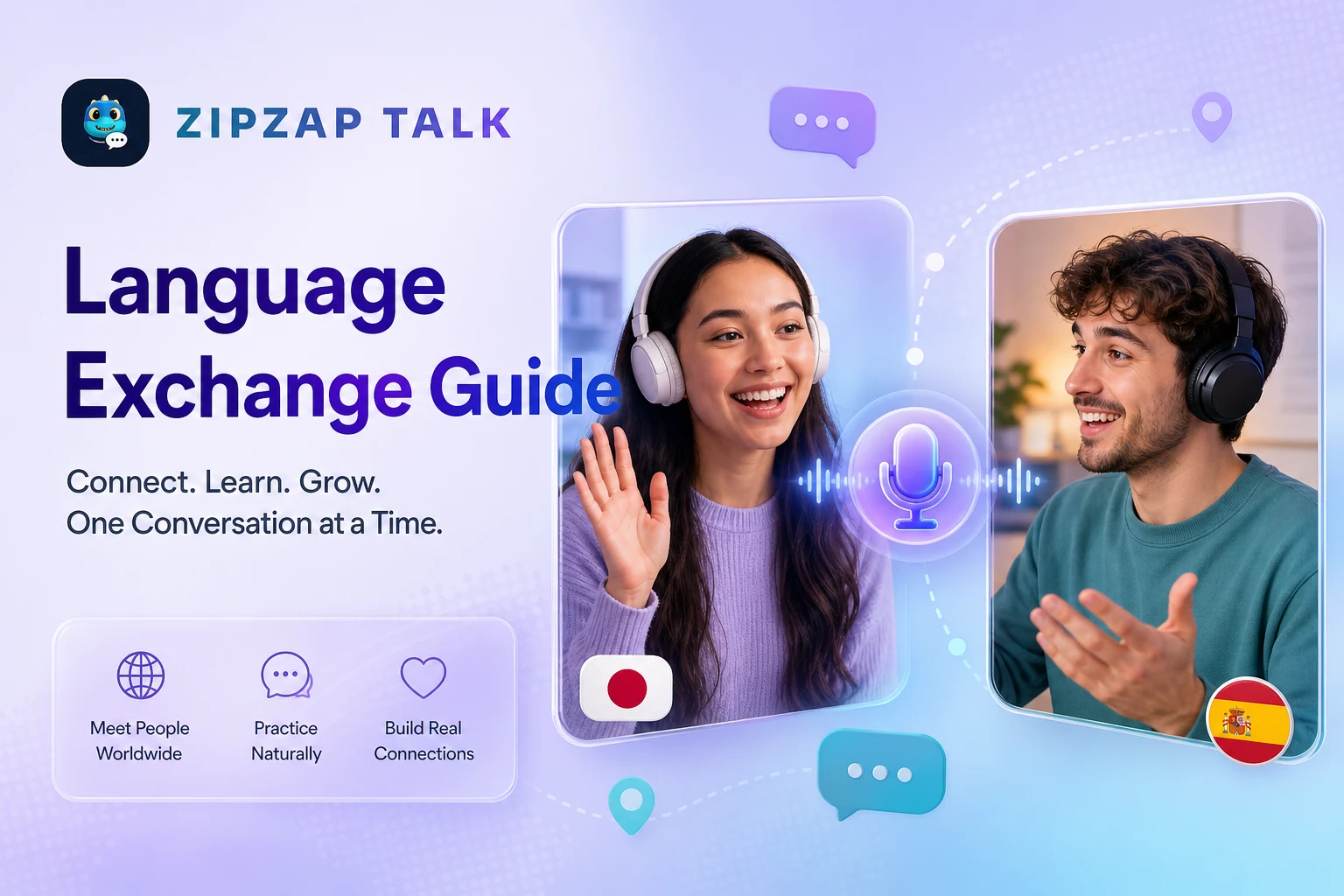
Native speakers give you rhythm, slang, and cultural context no textbook ships with. Online practice is safe when you control what you share and which platforms you trust.
Where to find native speakers
Language exchange apps, voice rooms, social language communities, and niche forums all work. Consistency beats novelty — pick one platform and stay active for at least a month before judging it.
Safety basics nobody should skip
- Use a nickname first; share real contact info only when you choose
- Keep conversations inside the app until trust builds
- Block and report without guilt if something feels off
- Never send money, gift cards, or personal documents
Make native speakers want to talk to you
Bring curiosity, not interrogation. Ask about their city, food, music — not grammar unless they enjoy teaching. Offer help in your language in return. Balance matters.
When AI translation helps native practice
Even advanced learners hit unknown words. Live translation keeps native conversations flowing instead of switching to English every two minutes — which is the habit that stalls progress.
ZipZap Talk matches learners and native speakers with vibe-based discovery and encrypted DMs. Join the waitlist if you want structured safety without giving up spontaneous conversation.