
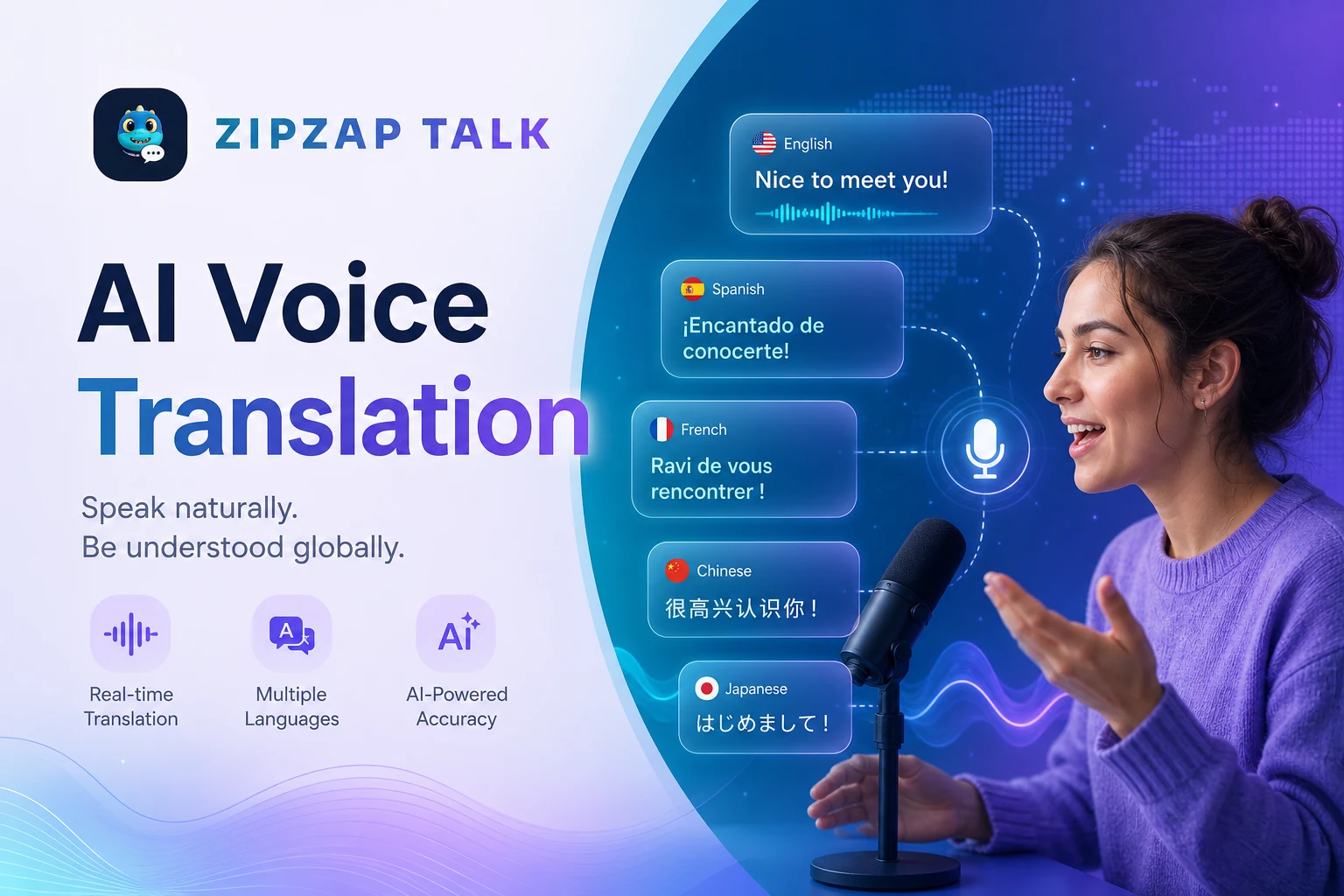
AI voice translation is not about replacing language learning. It is about removing the moment where a conversation dies because you do not know one word.
What AI voice translation actually does
You speak in your language. The other person hears it in theirs — often within a second. Same thing in reverse. In a voice room with six people from different countries, that is the difference between silence and a real discussion about music, food, or whatever you actually care about.
Why learners improve faster with it
When you are not terrified of breaking the flow, you take more risks. You try new phrases. You hear native rhythm and intonation while still understanding the content. That exposure compounds fast.
Think of it like training wheels that never embarrass you in front of a crowd. You are still pedaling. You are still moving.
When to lean on it vs. when to push through
Use translation heavily in your first months, especially for vocabulary you have never seen. Pull back when you notice you understood a full sentence before the audio played — that is a good sign your ear is catching up.
On-device vs. cloud translation
Speed matters in live voice. Cloud-based systems tend to handle more languages and nuance; on-device can be quicker and more private. The best apps combine both depending on connection and language pair.
Privacy matters in voice chat
You are sending voice data. Read the policy. End-to-end encrypted messaging is a strong signal that a company takes privacy seriously — especially if you are practicing with strangers online.
ZipZap Talk puts AI translation inside voice rooms, chat, and video calls so you are not switching apps mid-conversation. If you have been stuck at intermediate forever, this kind of tool is worth trying before you blame your memory.