
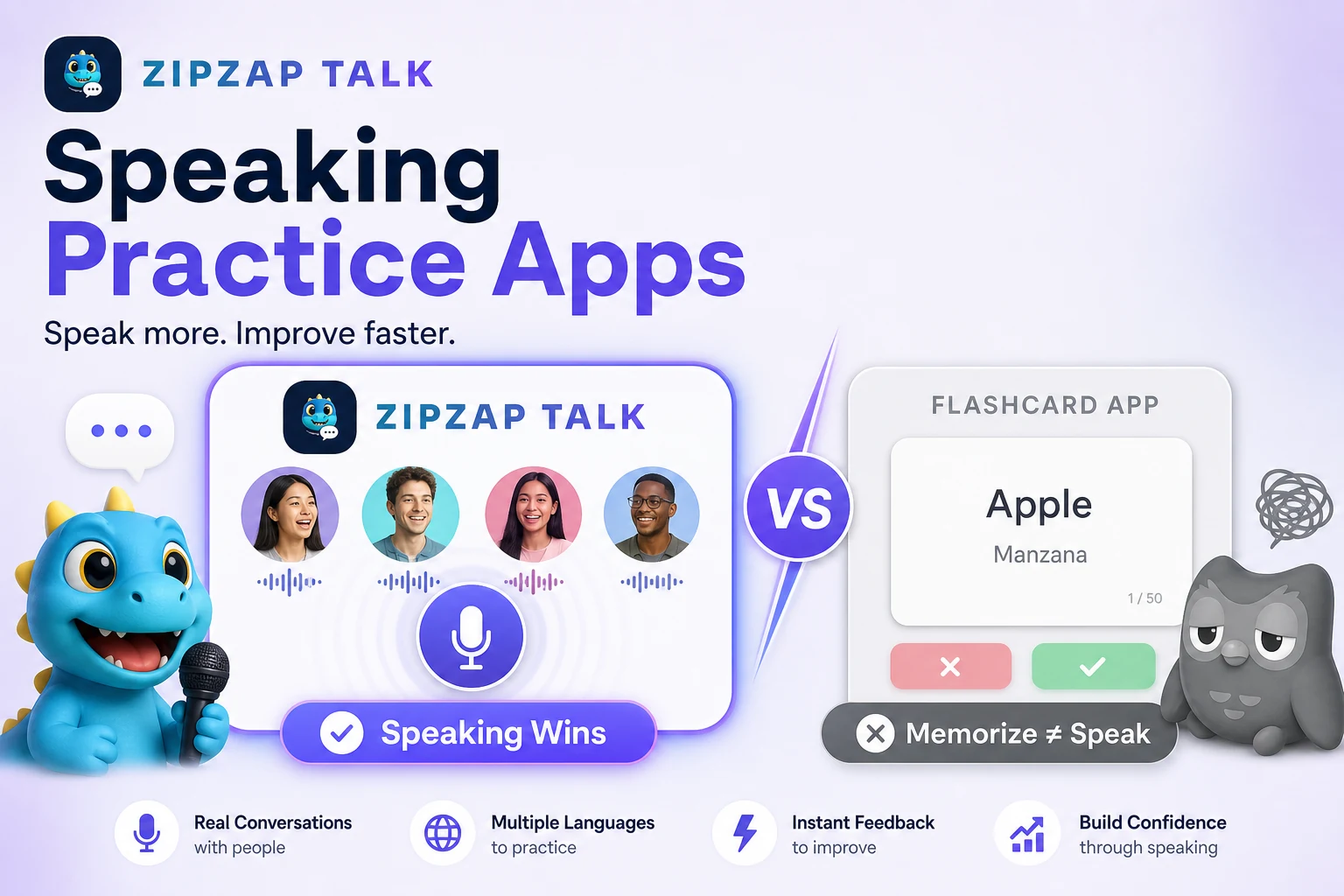
Speaking practice apps fall into three buckets: lesson apps (structured drills), exchange apps (human partners), and social voice platforms (rooms plus community). You probably need one from bucket two or three.
What lesson apps do well — and where they stop
Duolingo, Babbel, and similar tools build vocabulary and basic grammar. They are useful early. They rarely give you unscripted conversation at scale — which is where fluency actually lives.
Exchange apps: Tandem, HelloTalk, and others
Strong for text and scheduled calls. Weaker when voice lobbies are empty or partners ghost. Translation helps but UX varies wildly.
Social voice platforms: the emerging category
Always-on voice rooms, interest-based matching, translation inside chat — closer to how people actually socialize. Lower friction, higher retention for speaking-heavy learners.
Features worth prioritizing
- Live voice rooms, not only 1:1 matching
- Real-time translation across many languages
- Community safety tools
- Free tier that includes speaking time
ZipZap Talk combines voice rooms, AI translation, vibe matching, encrypted chat, and social features — aimed at learners who outgrew picture-matching lessons. Join the waitlist to try it at launch.