
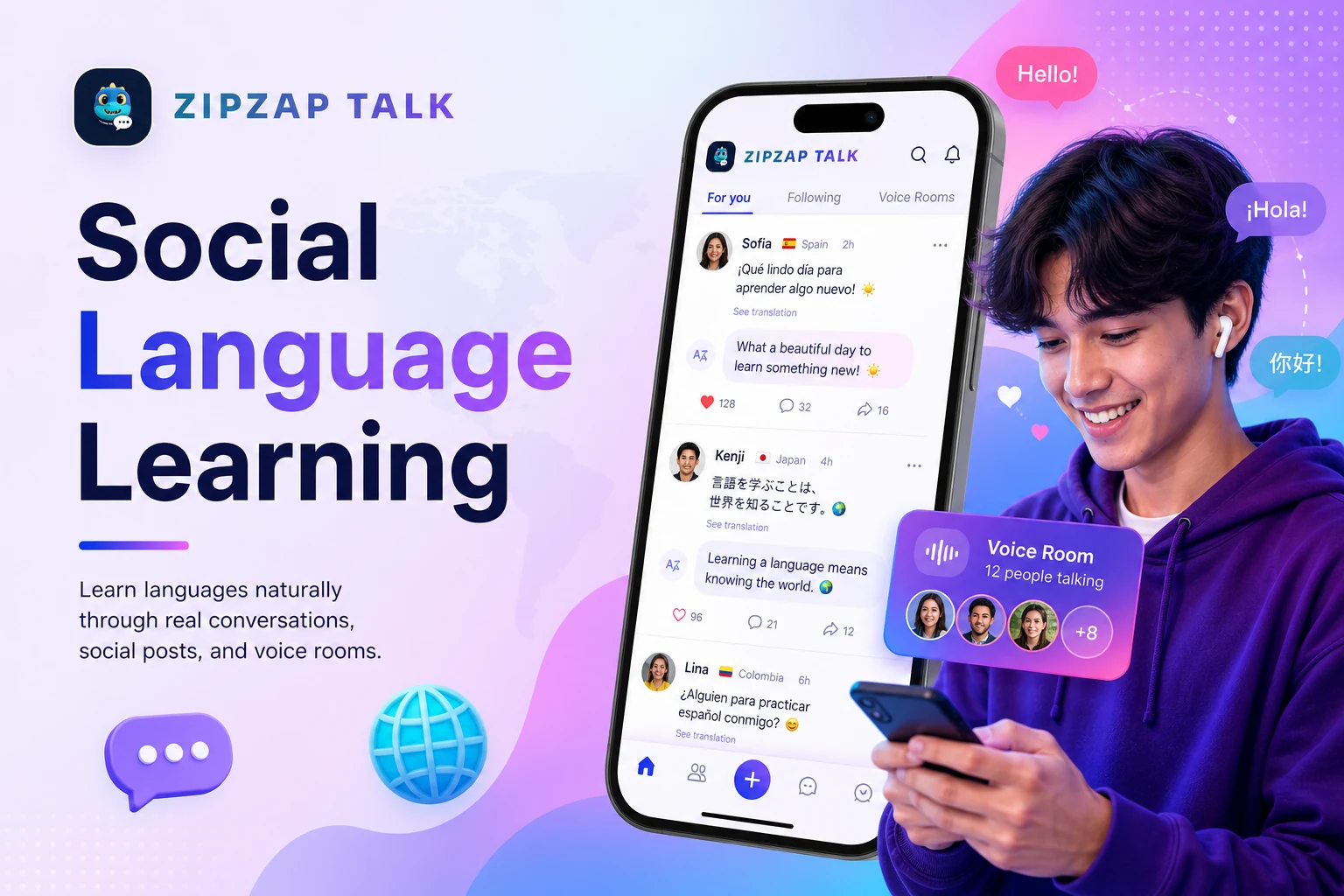
Language learning moved out of classrooms and into feeds, voice channels, and short posts. That is good news if you already spend time online — you are not adding a habit, you are redirecting one.
Why social formats work for languages
Short posts force brevity — the same skill you need in conversation. Stories and moments show casual grammar, reactions, and humor textbooks skip. Voice rooms add real-time back-and-forth without the pressure of a staged lesson.
Passive vs. active social learning
Scrolling foreign-language content is passive. Commenting, replying, joining voice discussions is active. You need both, but only active practice moves your speaking level.
Auto-translation in social feeds
When posts translate automatically, you stop skipping content above your level. You engage, reply, and pick up phrases in context — how people actually learn slang and tone.
Building a feed that teaches
Follow learners at your level, not only influencers who speak perfectly. Mix native content with learner posts so you see the full spectrum. Mute anything that makes you feel behind.
ZipZap Talk treats language learning like social media — moments, voice rooms, chat, games — with translation woven through. If Duolingo feels lonely, this model might fit how you already live online.